PRESSURE CONVERGES
What moved them
Four developments converged between November 1775 and the spring of 1776. One was a pamphlet; the others were acts of policy and war. Together they changed the setting in which colonists judged the argument for independence.
NOVEMBER 1775
Dunmore's Proclamation
Lord Dunmore, the royal governor of Virginia, having been driven aboard a warship, declared martial law and offered freedom to any enslaved person or indentured servant belonging to a rebel who would leave and bear arms for the King. Several hundred reached his lines within weeks and were formed into a regiment.
For many white slaveholders—especially in Virginia—the proclamation made imperial authority appear to threaten the labor system and social order on which their wealth rested. It did not single-handedly cause independence, but it helped turn a constitutional conflict into an urgent struggle over property, security, and power.
ARRIVING FEBRUARY 1776
The Prohibitory Act
Parliament declared American ships and cargoes subject to seizure and treated American commerce as enemy property. Many supporters of independence drew a constitutional conclusion from it: allegiance and protection were reciprocal, so a government waging unrestricted war on its subjects had weakened their obligation to obey. John Adams called it an “act of Independency.” Congress cited the statute in the preamble it adopted in May.
JANUARY 1776
Common Sense
Paine did not invent the case for independence, but he made it publicly arguable on an extraordinary scale. Its effect appeared not only in Congress but in the county meetings, town meetings, and provincial conventions that pressed colonial governments during the spring.
CONFIRMED IN SPRING
The German troops
The King had told Parliament in October that foreign troops would be engaged. Treaties with Hesse-Cassel and Brunswick followed, and when the terms became known in America they sharpened fears that Britain meant to subdue the colonies by force. For many colonists, hiring German troops further weakened the hopes of reconciliation expressed in the Olive Branch Petition.
DO NOT REDUCE THIS TO ONE CAUSE
Military escalation, parliamentary policy, political argument, local organizing, and the collapse of royal government reinforced one another. Different colonies assigned those pressures different weight, which is why the chronology below remains uneven.
SUPPORT WAS NOT THE SAME AS AUTHORITY
Three difficult cases
PENNSYLVANIA
Build authority beside the Assembly
The Assembly's instructions of November 1775 had expressly forbidden the delegates to agree to separation, and Dickinson intended them to hold. In May, Congress passed Adams's preamble calling for the suppression of all authority under the Crown, which was aimed directly at Pennsylvania and Maryland and understood as such. On 20 May a mass meeting in the State House yard resolved that the Assembly had forfeited its authority. The Assembly struck out the prohibition on 5 June but would go no further, and then lost its quorum. A Provincial Conference of county committees met from 18 June and declared its willingness to concur in independence before the month was out.
MARYLAND
Change instructions county by county
The Annapolis Convention rejected Adams's preamble on 20 May and reaffirmed its instructions against independence, which left Maryland isolated. Samuel Chase went home and worked the counties, collecting resolutions from local committees one after another, and sent them back to Philadelphia. The Convention reversed itself on 28 June, four days before the vote.
NEW YORK
Run out of time
New York never got there. Its Provincial Congress told the delegates on 8 June to wait for fresh instructions, and then the war overtook the politics: with the British fleet arriving off Sandy Hook, the Congress abandoned New York City on 30 June and did not sit again for ten days. So on 2 July the New York delegates had no authority to vote either way, and abstained. The resolution for independence carried twelve colonies to none, with one abstention.
These are not three versions of the same delay. Pennsylvania faced a contest between institutions, Maryland reversed explicit instructions through local pressure, and New York's delegates lacked authority when the vote arrived.
THE ROAD ENDS BEFORE THE SIGNATURES
Where June 1776 stops
Richard Henry Lee, acting on the instructions Virginia had given him on 15 May, moved in Congress on 7 June that these United Colonies are, and of right ought to be, free and independent States. Congress postponed the vote for three weeks in part to give delegations time to seek new authority and build broader agreement, and appointed a committee of five on 11 June to have a text ready in case the motion carried.
That is where this account ends: twelve delegations able to support independence through explicit instructions, legislative action, or broader powers; a motion on the table; a draft being written in a rented room on Market Street; and the vote not yet taken.
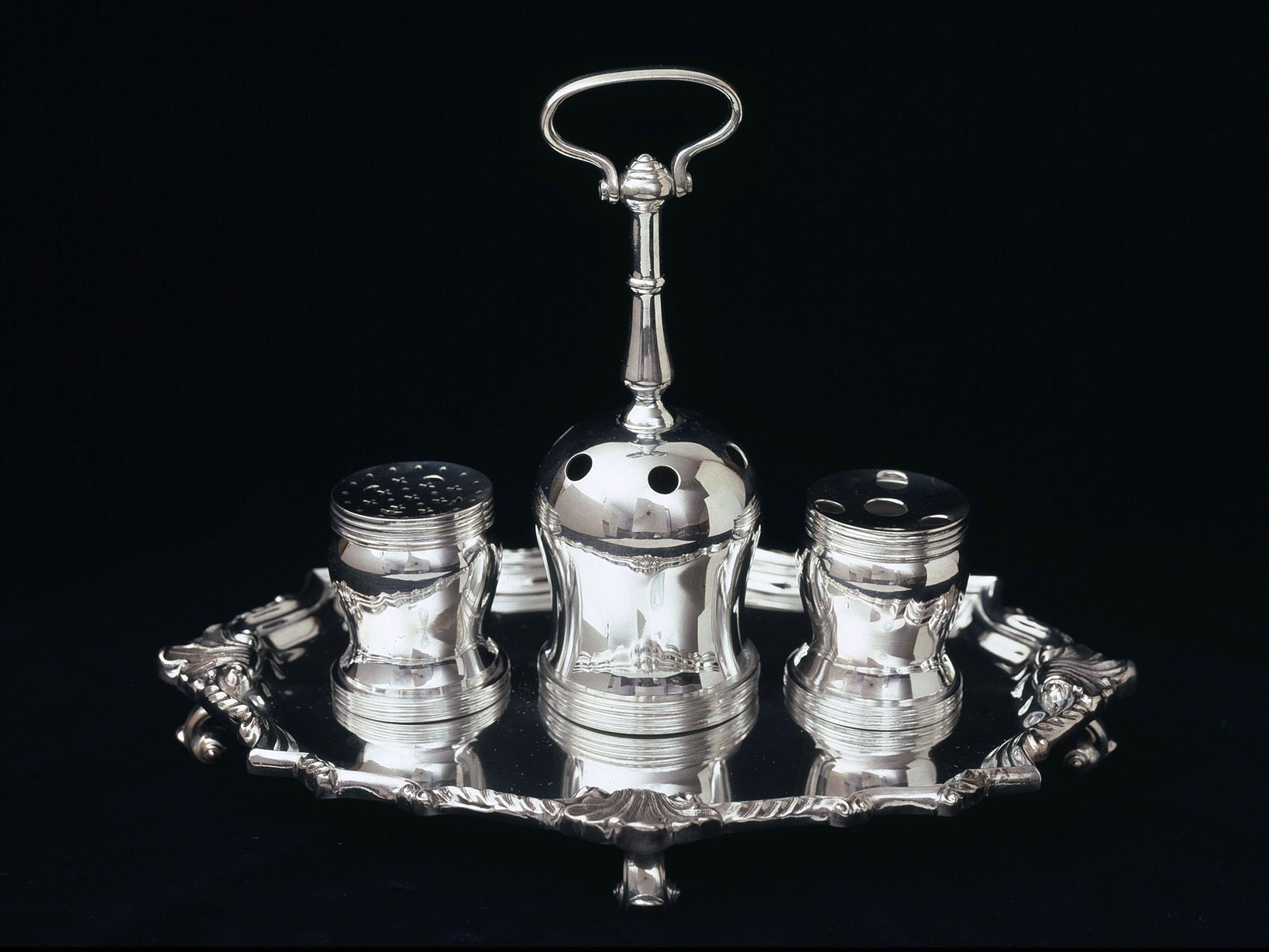
The inkstand belongs to this look ahead. It should not collapse authorization, the July 2 resolution, adoption of the Declaration, and later signatures into one event.
The Second Day of July 1776, will be the most memorable Epocha, in the History of America. I am apt to believe that it will be celebrated, by succeeding Generations, as the great anniversary Festival. John Adams to Abigail Adams, 3 July 1776
He predicted the anniversary date two days early, but described its future celebration with striking accuracy.
THE ROAD TO REVOLUTION
Independence was assembled, not announced into existence.
Across ten stops, policies produced resistance, resistance built networks, violence changed political possibilities, print redefined the argument, and new governing bodies claimed authority. By late June, enough of those separate processes had converged for Congress to act—but disagreement, delay, loyalism, and unequal participation remained.
The famous document was the outcome of that road, not a substitute for explaining it.
Source notes, qualifications, and interpretive choices
- Dates of authorisation are the dates of the operative resolution where one exists. Sources differ on several: Pennsylvania's conference is variously dated from its opening on 18 June to its declaration later that week, and New Jersey's delegates are given as empowered on 21 or 22 June.
- Massachusetts and Georgia issued no single instruction of the kind several other colonies passed. Their delegates acted on broad authority, and the dates shown are the nearest political or constitutional landmark rather than a direct authorisation to vote for independence.
- Massachusetts's canvass of the towns in the spring of 1776 is well attested but the returns are incomplete, and the General Court's resolution of support is given here from the standard accounts.
- Numbers who reached Dunmore's lines are disputed; contemporary estimates run from several hundred to over a thousand, and many died of disease in the camps within months.
- The count of twelve delegations able to act does not mean twelve colonies issued identical instructions. Eight directly instructed or empowered their delegates; Rhode Island renounced allegiance by statute; Pennsylvania's Assembly removed its prohibition while a Provincial Conference declared for independence; and Massachusetts and Georgia relied on broader authority.
- Pauline Maier identified more than ninety local and colonial declarations of independence between April and July 1776. The thirteen here are the ones that carried voting authority; they are not the whole of the phenomenon.
- The Syng inkstand is a documented 1752 silver object and the National Park Service says it is believed to have been used in the Declaration's signing. It opens this stop as a clearly labeled look ahead, not evidence that signatures occurred before the exhibit's June endpoint.
Colonial instructions are drawn from the Journals of the Continental Congress, published proceedings of provincial congresses and conventions, and standard accounts of spring 1776. For the final sequence, see the National Archives account of adoption and signing ↗ and the Library of Congress 1776 timeline ↗.