A DIFFERENT POLITICAL VOICE
The man who had been in America fourteen months
Thomas Paine was thirty-nine. He had been a staymaker, an excise officer twice dismissed, a shopkeeper who went bankrupt, and a schoolteacher, and he had failed at all of it. In London in 1774 he met Benjamin Franklin, who gave him a letter of introduction, and he arrived in Philadelphia in November of that year so ill with typhus that he had to be carried off the ship. He was editing a magazine within three months.
None of the men who had been arguing with Britain for a decade could have written this pamphlet, and not only because of their politics. Dickinson wrote as a lawyer for readers who respected lawyers. The Congress wrote in the language of petitions. Paine had no Latin, no classical education and no position to protect, and he wrote for the people he had spent his life among: tradesmen, sailors, small farmers, men who read one thing a week and read it aloud.
So the citations are biblical rather than classical, because his readers knew the Book of Samuel and did not know Tacitus. The sentences are short. The arguments come as images that survive being repeated at second hand: an ass for a lion, a French bastard with an armed banditti, a satellite larger than its planet, the Royal Brute of Britain. You cannot paraphrase Dickinson accurately from memory. You can paraphrase Paine perfectly, and that is a design decision, not an accident of talent.
He also kept his name off it. The title page said only that it was written by an Englishman, which both protected him and made the argument the object of attention rather than the man.
The part everybody forgets: Paine's plan for a new government
Common Sense is remembered as a demolition of monarchy. Rather more than a third of it is a practical proposal for what to build instead, and the proposal is startling.
Paine wanted annual assemblies in each colony with a president only and no governor, their business wholly domestic and subject to a Continental Congress. He wanted each colony divided into districts sending at least thirty delegates each, a Congress of at least three hundred and ninety. He wanted its president chosen by taking a colony by lot and then balloting among that colony's delegates, with the colony excluded from the next round until all thirteen had had their turn. He wanted nothing to become law on less than three fifths of the whole. And he wanted a Continental Charter, answering to Magna Carta, framed by a special conference of Congress members, assembly members and delegates chosen directly by the people, and then dissolved.
No hereditary anything. No upper house. No executive worth the name. A rotating presidency allocated partly by chance, so that no man could campaign for it.
let a crown be placed thereon, by which the world may know, that so far as we approve of monarchy, that in America the law is king. For as in absolute governments the King is law, so in free countries the law ought to be King; and there ought to be no other. But lest any ill use should afterwards arise, let the crown at the conclusion of the ceremony be demolished, and scattered among the people whose right it is. Common Sense, on the proclaiming of the Continental Charter
THE LOYALIST COUNTERARGUMENT
What if independence made Americans less secure?
Common Sense did not end the debate. It sharpened it. Two colonial loyalists answered Paine by defending continued connection with Britain: Charles Inglis, an Anglican clergyman in New York, and James Chalmers, a Maryland writer. Their case asked readers to judge independence not only by its promises, but by its possible costs.
CHARLES INGLIS · “AN AMERICAN”
The True Interest of America Impartially Stated
“By a reconciliation with Britain, a period would be put to the present calamitous war.”Charles Inglis, 1776
Inglis reversed Paine's argument about necessity. Separation, he warned, would close the path to negotiation and leave the sword to decide the conflict. Reconciliation promised an end to bloodshed, restored trade, and continued access to British power and protection.
JAMES CHALMERS · “CANDIDUS”
Plain Truth
“Independence and slavery are synonymous terms.”James Chalmers, 1776
Chalmers used this deliberately shocking reversal to argue that independence would not produce freedom. He predicted a destructive war, heavy debts and taxes, conflict among the colonies, and dangerous dependence on foreign powers. British connection, in his telling, offered greater liberty and security than an uncertain republic.
THE CHOICE THEY WANTED READERS TO SEE
Paine framed reconciliation as submission and independence as common sense. Inglis and Chalmers framed reconciliation as the safer protection of liberty and independence as a leap into war, division, debt, and foreign danger. Their replies show that the argument in 1776 was not simply courage against cowardice. It was also a dispute over which future carried the greater risk.
USE THE STRONGER EVIDENCE
How many copies, honestly?
You will read that Common Sense sold a hundred and twenty thousand copies in three months, or five hundred thousand in a year, and that it was the best-selling title in American history relative to population. Treat all of that with care.
The hundred and twenty thousand figure comes from Paine himself, in the middle of a public quarrel with his first printer about money, which is not a neutral setting for a sales claim. The half-million figure appears later and has no documentary basis anybody has produced. Bibliographers who have gone looking for the physical evidence — surviving copies, printers' records, the capacity of the presses involved — have argued that the real print run in 1776 was a good deal smaller, and that the enormous numbers were part of how the Revolution later described itself to itself.
What is not in doubt is the number of editions. It was reprinted in at least twenty-five separate settings in 1776, in Philadelphia, New York, Boston, Salem, Hartford, Newport, Providence, Norwich, Lancaster, Albany and Charleston, plus London, Edinburgh, Newcastle and Dublin, plus a French translation. That is the better measure. A pamphlet reprinted in every printing town on the continent within months is doing its work whether the total is seventy-five thousand or two hundred thousand.
THE ROAD TO REVOLUTION
What it did—and what it did not do
It did not cause the Revolution. The army had been in the field for nine months when it appeared, and the King had proclaimed the colonies in rebellion five months before.
What it did was destroy a position. Until January 1776 the respectable American argument had a fixed shape: Parliament was at fault, the ministry was at fault, the King had been misled, and the object was redress within the empire. That position had a great deal going for it. It was what most people believed, it held the middle colonies inside the coalition, and it had been the formal language of every colonial body since 1765, most recently in the Olive Branch Petition.
Paine did not argue that the position was wrong. He argued that it was childish, and he did it in language that made holding it publicly embarrassing. Once the King was the Royal Brute and reconciliation a fallacious dream, a delegate defending the old line was no longer the voice of prudence; he was the man who had not caught up. Dickinson would discover this in Congress in July.
And the timing was luck as much as judgement. Paine noted in his appendix that the King's speech of October reached Philadelphia on the same day the pamphlet came out, and that the coincidence did his work for him: men read by way of revenge.
Independence became a public argument
Paine named the King as the problem, attacked monarchy itself, and presented separation as practical rather than desperate. Readers could now debate independence in language meant for shops, farms, taverns, and military camps—not only legislative chambers.
Reprinting created reach—and resistance
Printers issued new editions in cities across the colonies, while loyalists and supporters of independence published replies. The volume of counterargument is evidence that Paine had changed the terms of debate, not that every reader agreed.
Colonies began authorizing the choice
North Carolina’s Halifax Resolves empowered its delegates to support independence. Congress also opened American ports to most of the world, weakening the commercial structure of empire before declaring a formal separation.
The question moved from persuasion to authority
Congress recommended that colonies replace governments resting on Crown authority, and Virginia instructed its delegates to propose independence. The issue was becoming who had authorized Congress to act—and whether all thirteen colonies would turn together.
WHY THIS STOP MATTERS
Paine changed the imaginable choice
Common Sense did not create the military crisis, erase loyalism, or single-handedly convert thirteen colonies. It helped destroy the language of reconciliation that had held the coalition together in 1775. It joined moral attack, constitutional argument, practical calculation, and a republican alternative in words that could travel.
The final stop follows the political work a pamphlet could not perform: provincial conventions, town meetings, new instructions, and the uneven process by which thirteen colonies gave their delegates authority to choose independence.
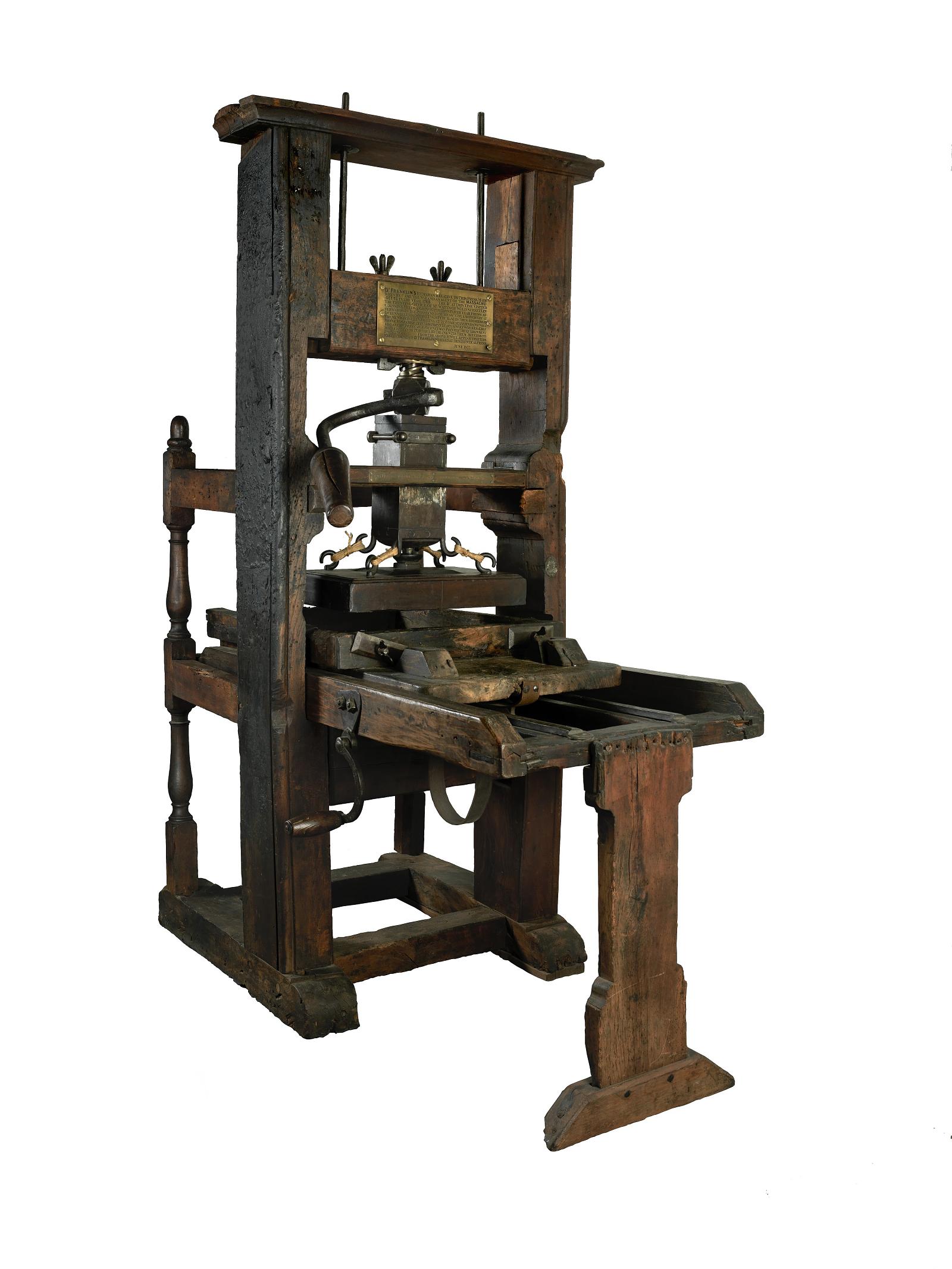
Follow the print and political sequence through the Library of Congress printing exhibition ↗, the Library of Congress record for the 1776 Bell edition ↗, and the Smithsonian record for the Franklin press ↗.
Source notes, qualifications, and interpretive choices
- The text quoted here is from the enlarged Bradford edition of 14 February 1776, which is the version normally reprinted. The first Bell edition of 10 January is slightly shorter and lacks the appendix. Where a passage is from the appendix, it postdates the pamphlet's first appearance by five weeks.
- Sales figures are discussed above and should be treated as contested. Edition counts are firmer than copy counts.
- The remark often attributed to John Adams that without the pen of the author of Common Sense the sword of Washington would have been raised in vain is of doubtful provenance and is not quoted here. Adams's recorded views on Paine were a great deal less flattering.
- Dates in the After column are the dates of the resolutions cited. Several colonies moved earlier or later, and Pauline Maier counted more than ninety separate local and state declarations between April and July 1776.
- Paine's authorship was an open secret in Philadelphia within weeks, though the pamphlet was never signed. Benjamin Rush, who suggested the title and found the printer, is the main source for how it came to be written.
- The Franklin press is an authentic eighteenth-century common press associated with Franklin, but it did not print Common Sense. It is used to investigate print technology and networks, not as a relic of Paine's first edition.
Paine is quoted from the Project Gutenberg text of the February 1776 Bradford edition. The Olive Branch Petition and the Declaration on Taking Up Arms are from the Journals of the Continental Congress; Dickinson from the 1768 Boston edition of the Letters; Adams's preamble of 15 May 1776 from the Journals and from the Adams Papers. The loyalist excerpts are from Charles Inglis's The True Interest of America Impartially Stated and James Chalmers's Plain Truth, both published in 1776.