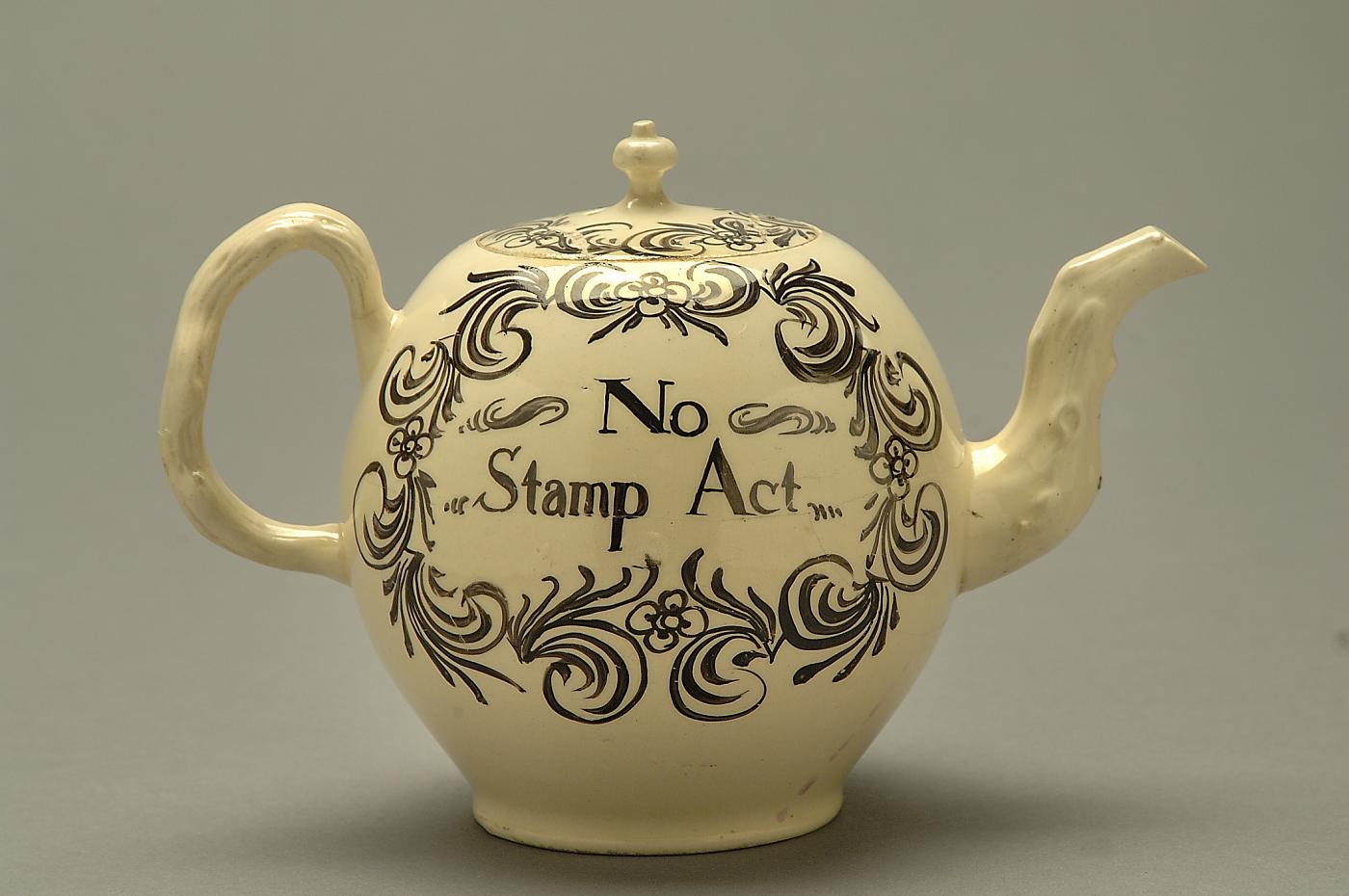
FOLLOW THE ARGUMENT
Who could tax the colonies?
The arithmetic that was supposed to make it uncontroversial
Britain came out of the Seven Years’ War owing about £130 million, roughly double the debt it went in with, and decided to keep ten thousand regulars in America at a cost of something over £200,000 a year. The stamp duty was expected to raise about £60,000 — not enough to pay for a third of the army it was meant to support.
By British standards it was mild. A man in England paid something like twenty-six shillings a year in taxes; a man in Massachusetts paid about one. Grenville thought he was asking for a modest contribution to a war fought largely on the colonists’ behalf, and was genuinely surprised by what followed.
What he had misread was the kind of objection he would get. He was braced for complaints about the amount, and for the real difficulty that the duties had to be paid in sterling coin which the colonies did not have. Either of those he could have met: he could have halved the rates, or exempted the poorer colonies, or taken payment in colonial currency. What came back instead was an argument about whether Parliament had any business asking at all — and no adjustment to the rates could answer that, because the rates were not what was being disputed.
Why a small tax was the wrong tax
Every previous parliamentary duty had been laid on trade, which the colonies accepted as the price of belonging to an empire that policed the sea lanes. This one fell on documents inside the colonies, and it fell on exactly the people best equipped to object: printers, lawyers, merchants, tavern-keepers and anyone with a ship to clear or a suit to file. A tax on newspapers is a tax on the men who write the newspapers.
THE BRITISH ANSWER
Virtual representation
The constitutional argument was that an Englishman could be taxed only by his own representatives, and that no American had ever voted for anyone at Westminster. The official answer, set out for the Treasury by Thomas Whately, was virtual representation. A member of Parliament sat for the whole realm and not merely for the few hundred men who happened to have chosen him. Manchester, Birmingham and Leeds returned nobody at all and were taxed like everywhere else, and nobody called that tyranny; the colonies were in the same position, and no worse off for it.
DULANY’S OBJECTION
Whose interests were protected?
Daniel Dulany of Maryland took that apart in a pamphlet that was read on both sides of the Atlantic and quoted approvingly in the Commons itself. The reason an unrepresented householder in Manchester was safe, he argued, was not that his member was imaginary but that every tax laid on him fell at the same moment on thousands of men who did have votes and who lived in the same street. Their interest and his were one interest, so the men with votes could be relied on to protect the men without, because in protecting them they protected themselves.
Between Britain and America that identity of interest did not exist, and in fact ran backwards. A tax laid on the colonies fell on nobody who voted for it. It did the opposite: every pound raised in Boston was a pound that did not have to be raised in Bristol. The harder America was pressed, the lighter the load on the men doing the pressing. Representation that worked by shared interest could not work across a line where the interests were opposed, and that was the hole in the doctrine that nobody in the ministry ever successfully filled.
BUILD A COLONIAL RESPONSE
The Stamp Act Congress
Massachusetts invited the colonial assemblies to meet in New York. From 7 to 25 October 1765, twenty-seven delegates from nine colonies worked across colonial boundaries on a common response to Parliament.
On 19 October, the Congress agreed to a Declaration of Rights and Grievances. It affirmed allegiance to the king and claimed the rights of British subjects, while insisting that taxes could be imposed only by representatives chosen by the colonists themselves. It also defended trial by jury and petitioned the king and Parliament for relief.
REPRESENTED / 9
- Massachusetts
- Rhode Island
- Connecticut
- New York
- New Jersey
- Pennsylvania
- Delaware
- Maryland
- South Carolina
NOT REPRESENTED / 4
- New Hampshire
- Virginia
- North Carolina
- Georgia
Absence did not necessarily mean support for the Act. Some assemblies were unable to meet or authorize delegates.
British subjects
The delegates grounded their protest in rights they believed they already possessed—not in separation from Britain.
Consent to taxation
Only representatives chosen by the colonists could impose internal taxes on them.
Trial by jury
Expanding vice-admiralty jurisdiction threatened another right the delegates claimed as essential.
Common action
Nine colonies spoke together instead of sending only separate provincial complaints.
Read the Declaration of Rights and Grievances ↗
ON THE ROAD TO INDEPENDENCE
A precedent, not a straight line
- 1765The Stamp Act Congress created a shared petition and declaration.
- 1772Boston organized a standing committee of correspondence to circulate grievances and coordinate with Massachusetts towns.
- 1773Virginia proposed an intercolonial committee network; other colonies followed.
- 1774The First Continental Congress assembled after the Coercive Acts.
The Stamp Act Congress did not establish the later committees of correspondence. It helped establish the habit and precedent of intercolonial consultation that those committees made more regular and durable.
TRACE THE PRESSURE
What actually beat it
Not the pamphlets. The Act was defeated by twelve resignations and a buyers’ strike.
Disable collection
The distributors were the whole mechanism: no stamps could be issued without them, and each one was a known local man with a house and a business that a crowd could reach. Once Boston demonstrated in August how quickly a distributor could be persuaded, the rest followed in a chain down the coast, most of them without a hand being laid on them. By the time the Act came into force on 1 November, resistance had already disabled much of the mainland distribution network.
Make trade pressure felt
Then the merchants of New York, Philadelphia and Boston stopped importing. British exporters watched their American orders vanish and petitioned Parliament in their own interest, and it was those petitions, not the Declaration of Rights and Grievances, that carried the repeal by 275 votes to 167.
RETURN TO THE TEAPOT
What the repeal conceded
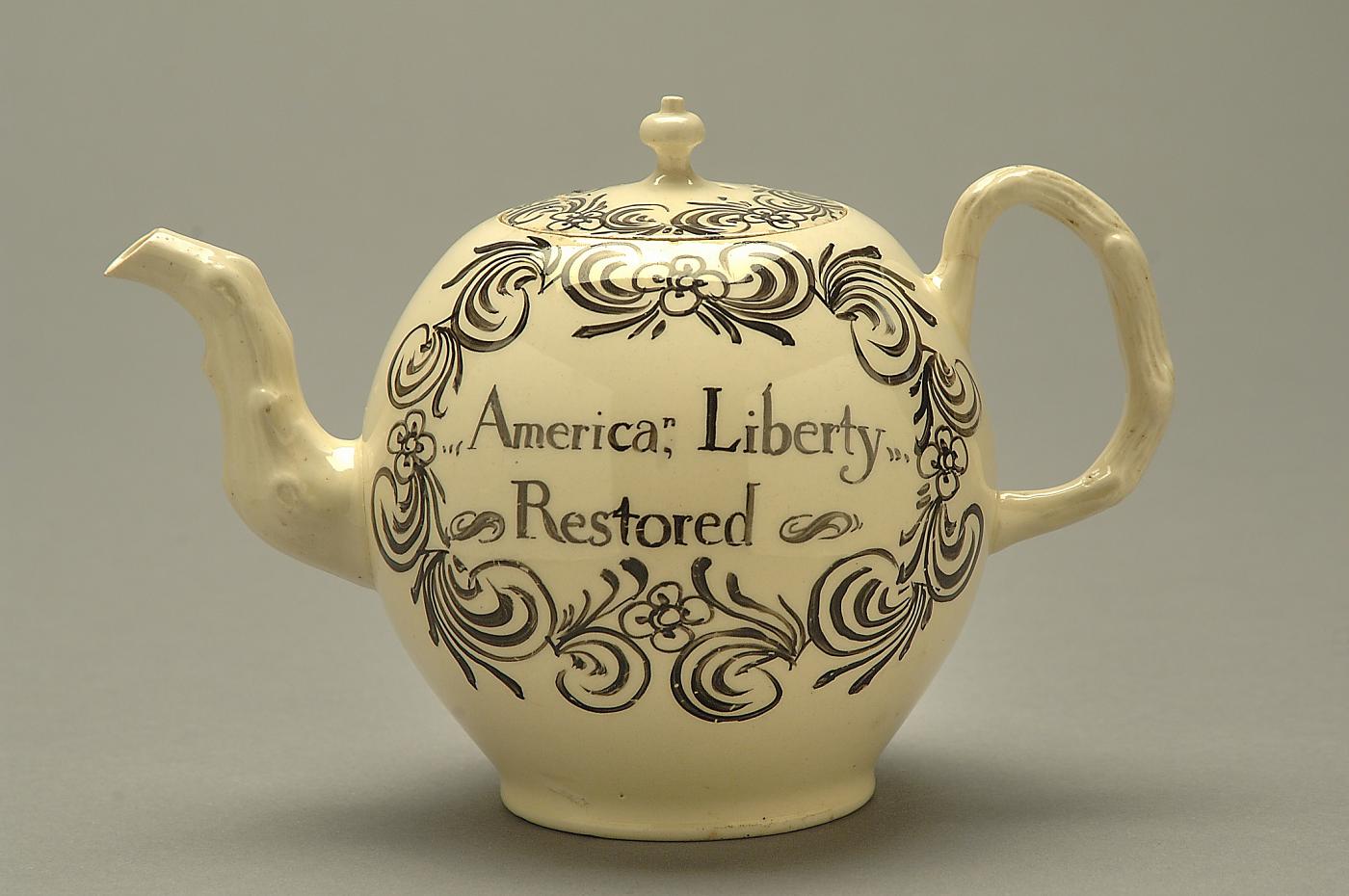
Nothing. On the same day in March 1766 that the King assented to the repeal, he assented to the Declaratory Act, which stated that Parliament had, hath, and of right ought to have, full power and authority to make laws and statutes to bind the colonies and people of America in all cases whatsoever. The wording was lifted from the Act that governed Ireland.
America celebrated the repeal and paid almost no attention to the declaration, and so each side came away with the conclusion it preferred.
In the colonies the lesson was practical: Parliament had backed down under pressure within five months, which seemed to settle that it had no business taxing them internally and would not try again. At Westminster the lesson was that the right had now been put beyond argument by statute, and that the only remaining question was the expedient moment to use it. Both readings were sincere and they were incompatible, and neither side had any reason yet to discover that.
So when Charles Townshend came back in 1767 with duties on glass, lead, paint, paper and tea, he thought he had found the way through: these were duties on trade, collected at the port, of exactly the kind Franklin had assured the Commons the colonies had always accepted. The colonies replied that a tax was a tax whatever door it came in by, and that the distinction Franklin had drawn was not one they were bound to. The quarrel restarted in the same place it had stopped, and this time it did not get put down again.
COMPLICATE THE STORY
Three things the celebration covered over
The crisis is usually told as thirteen colonies acting as one. They did not.
Not all colonies responded alike
Georgia issued stamps in January 1766, the only mainland colony where the Act partly worked, and Nova Scotia, Quebec, Newfoundland, the Floridas and most of the British West Indies bought stamps and carried on without a disturbance worth the name. There is a pattern in who refused and who complied, and it is not really about courage.
Examine this complication
Resistance on the scale that beat the Act needed machinery, and the machinery took decades to build. It needed an assembly that met regularly and had a long habit of fighting its governor over money, so that defying London was a familiar move rather than an unthinkable one. It needed enough merchants to make a boycott hurt, printers who owned their own presses, lawyers who argued constitutional points for a living, and a town big enough to put several thousand people in the street. Massachusetts and Virginia had all of it and had been practising for a century. Nova Scotia’s assembly was seven years old and sat in a garrison town where the Royal Navy was the largest employer. Quebec had no assembly at all. Georgia’s was thirteen years old, its government was partly paid for by parliamentary grant, and its defence against the Creek rested on British regulars it could not afford to offend. The sugar islands had the wealth but small white populations living among much larger enslaved ones, and no interest at all in demonstrating that authority could be defied and nothing would happen. Where the machinery already existed the Act was dead within weeks. Where it did not, people bought the stamps.
Crowds had purposes of their own
The crowds were not simply an instrument that the merchants and lawyers picked up and put down. Boston’s two riots were twelve days apart and were not the same kind of event, and the difference is the whole point.
Examine this complication
On 14 August the target was precise and the damage was rationed. An effigy of Andrew Oliver, a procession, the levelling of one small building on Kilby Street believed to be the new stamp office, and a visit to Oliver’s house that stopped short of destroying it. That action was planned by the Loyall Nine, a caucus of shopkeepers and tradesmen working with Samuel Adams and the merchant leadership, and it did exactly what they had designed it to do: Oliver resigned the next morning and the Act had no officer in Massachusetts.
On 26 August the crowd went somewhere nobody had sent it. Thomas Hutchinson was not the stamp distributor and had nothing to do with the stamps; he had in fact written privately to London advising against the Act. What he was, to the men in the street, was the visible summit of a small group of families who between them held most of the offices in the province. He was lieutenant-governor, chief justice, a member of the council and a judge of probate at the same time, and his relatives held much of the rest. The same night the crowd also went for William Story of the vice-admiralty court and Benjamin Hallowell the comptroller of customs, which is to say the two men who seized ships and tried smugglers without juries. They took Hutchinson’s house apart down to the wainscot, carried off about nine hundred pounds in cash, and destroyed thirty years of his manuscripts. Those are the grievances of people much further down than the merchants who had cheered on the fourteenth: office-holding, customs seizures, and the sight of great wealth accumulating through a hard war and a worse peace.
What the merchants did next says how much it frightened them. Boston’s town meeting condemned the riot the following morning and voted to help find those responsible. The merchants formed a watch and patrolled the streets themselves. Ebenezer Mackintosh, the shoemaker who had led both nights, was arrested and then released within hours — partly because the customs house would not reopen while he was held, and partly because he was in a position to say which gentlemen had encouraged the first riot. From that point he was employed rather than prosecuted. The Pope’s Day procession on 5 November, traditionally an annual running battle between the North End and South End gangs, was turned into one disciplined parade with Mackintosh marching at its head in a militia officer’s coat. Oliver’s second and public resignation in December was staged under the Liberty Tree before two thousand people with nothing broken at all. That is what the autumn was spent on: keeping the crowd in the politics, and making sure it never again chose its own target.
Liberty had an excluded audience
The language of the protest had a second audience that nobody had intended. South Carolina’s resistance was as sharp as any colony’s. Christopher Gadsden went to the Stamp Act Congress and argued that the colonies should stand on their rights as Americans rather than each on its own separate charter. Charleston’s crowds paraded under a Liberty flag, shouting Liberty and Property and No Stamps, and buried a coffin marked American Liberty. The colony also held more enslaved people than free ones, and its entire public order rested on the assumption that they could not organise.
Examine this complication
In January 1766, with the Act still nominally in force and the town full of that vocabulary, Charleston was told that enslaved people in the city had been heard using the same word. Whether anything was actually planned has never been established, and most likely nothing was. The response is not in doubt. The assembly called out the militia, patrols ran day and night for something like a fortnight, the town went about armed, and the alarm ran on into the spring — while several of the men who had ordered it privately doubted there had ever been anything to it. The word that Charleston had spent six months shouting at Parliament turned out to be audible to everyone in Charleston, and the colony that was insisting it would not be reduced to slavery by a distant legislature was imposing precisely that condition, at home, on the majority of the people living in it.
Map-making notes: where this is approximate
- Colony colour reads the royal assent of 22 March 1765 as the moment a distributor was in place. The appointments were actually made across the spring, and the men reached their posts at different times through the summer and autumn.
- A few resignation dates are given differently by different sources, particularly William Coxe’s in New Jersey and James McEvers’s in New York. Where sources disagree the map takes the most commonly cited date.
- Zachariah Hood is shown as out from 26 August 1765, when his warehouse was destroyed and he fled Maryland. His formal resignation came three months later, on Long Island.
- John Hughes never resigned. He undertook not to execute the office, which had the same effect.
- Boundaries are those of 1763, drawn as on the companion map: colonial western limits at the Proclamation Line, Vermont shown as the disputed New Hampshire Grants.
- Coast and lakes are modern survey data.
FOLLOW THE SEQUENCE / 1765–1766
The whole sequence
Choose an event to return to its date and explanation on the map.